
artificial innocence / standing still / the red stain
The original pictures these pieces of artwork were based on came from an AI-powered museum called Dataland. A close relative wanted to visit, so I tagged along. The inaugural exhibition, titled “Machine Dreams: Rainforest,” featured images generated by a large rainforest database. I found it ironic, as its purpose was to “preserve nature through recording the data using artificial intelligence,” while some of the main tech sponsors included Google and Nvidia — famously known for their work in preserving the environment. Right.
Participants enter the exhibition with a sensor worn around the neck and a biometric monitor secured on the wrist. The sensor emits scents that correspond to the images in front of the participant, while the biometric monitor determines the color and texture of the image displayed in front of the participant. The photos I took here are from Exhibition A — Data Pavilion / Latent Forest. This first portion of the exhibition is a large room with a 20-minute timer. Visitors move around in the space where the image is generated, and their biofeedback influences the color and shape of the enormous image. When the timer ends, the image resets with a dramatic glitch sequence. Instead of trying to see the projected patterns that my movements had produced, I moved around the room and attempted to study how the technology behind this piece functioned. While looking over the ceiling and along the walls, I noticed the placement of a significant number of sensors and portable projectors set up to cover all corners of the space. I thought it was quite representative of the current state of society, especially with Flock cameras around major cities logging the movement of everyday citizens.
The base image of the first piece, “Artificial Innocence,” comes from the reset sequence of the first exhibition, where numbers and lines of code were randomized to create the illusion of the system resetting. I mirrored the same image and blurred it using analog effects to make it look somewhat trippy.
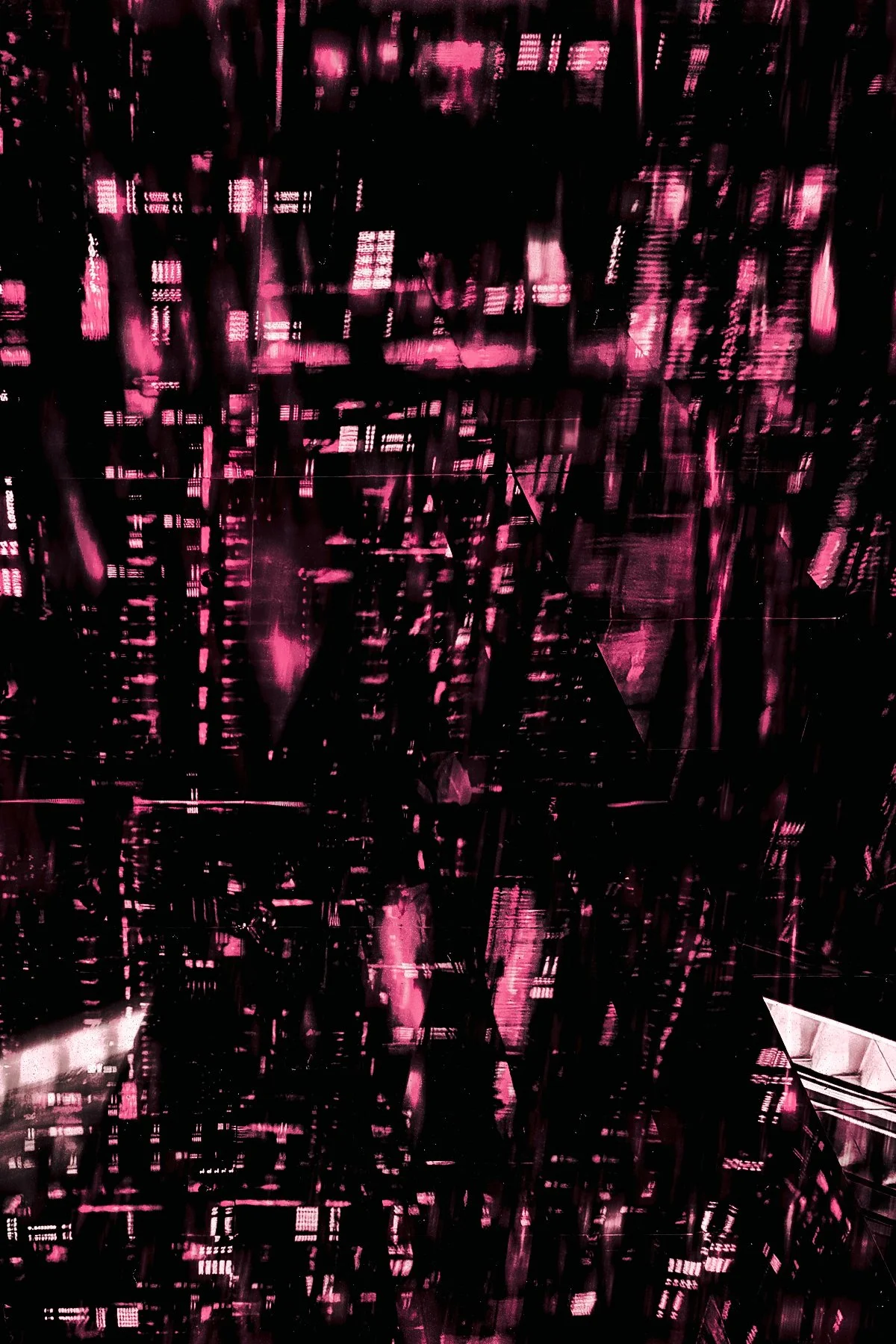
Artificial Innocence -- 4×6, Mixed Media
The base images of the second piece, “Standing Still,” are from the glass ceiling of the room. I took numerous pictures of that because I liked the perspective of seeing everyone’s movements around the room on a two-dimensional surface — almost like an organic screen. I merged this image with textures of concrete roads and walls I’ve scanned with a portable scanner, and played around with the coloring a bit until I thought it looked decent.
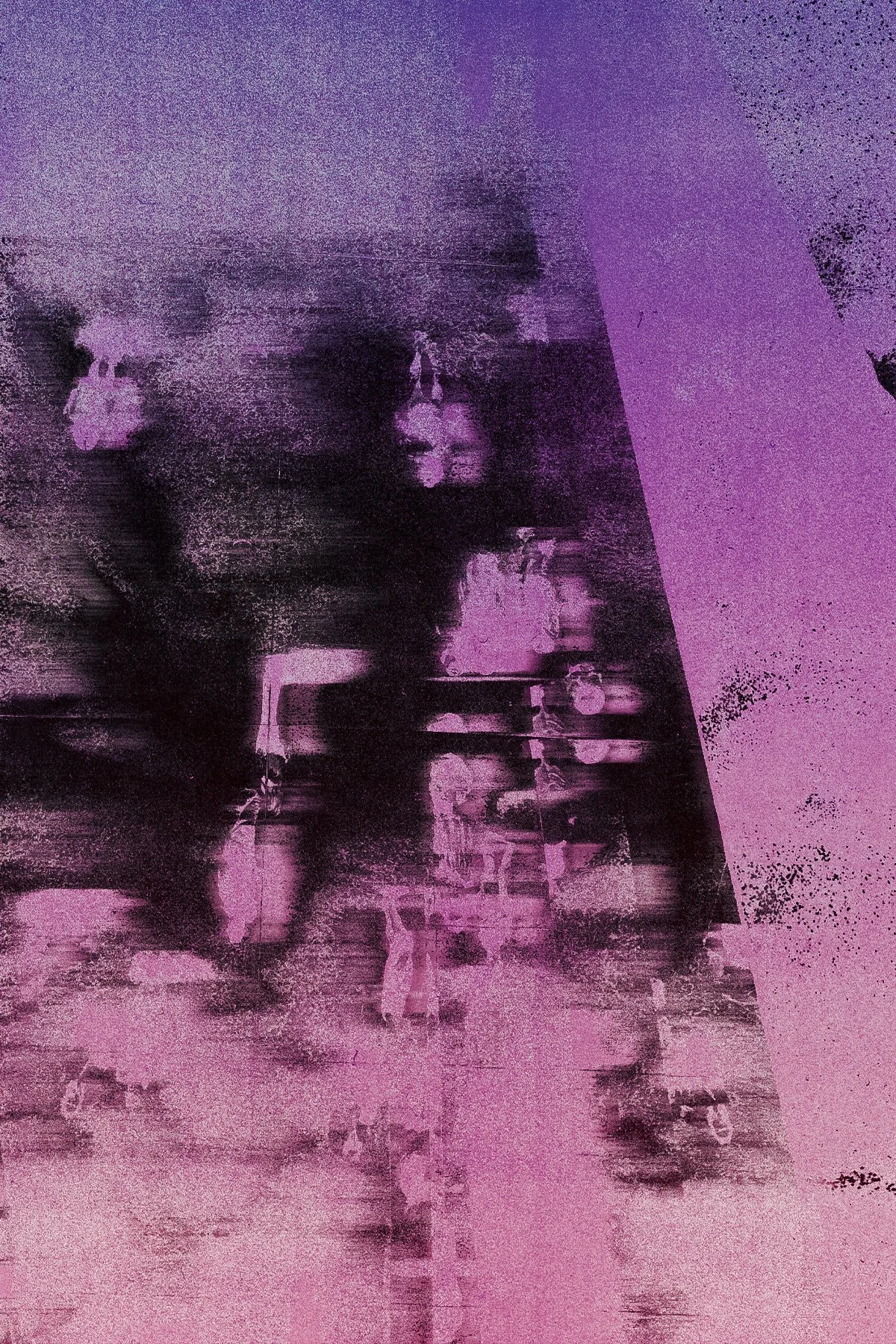
Standing Still -- 4×6, Mixed Media
This third piece, “The Red Stain,” is made from images of the glass ceiling from different angles, then merged together to create an almost cyberpunk atmosphere. I wanted it to seem like the artwork was being zoomed in on, so I applied different motion blur effects to different parts of the image. The title of the piece, however, came from an ambient track I’ve been working on rather than from the exhibition. I was in Austin around mid-March to participate in some grassroots events and concerts related — but not directly affiliated — with SXSW. It was around 1 a.m.-ish, and I was walking on the streets after a show thrown by UMAW. The quiet atmosphere gave me an idea, and I started demoing sounds and melodies as soon as I returned to my hotel room, despite being very tired. All of my work from that night laid the groundwork for multiple tracks of a fundraiser acoustic/electronic project I am working on, with artwork prepared by a local artist from Austin. I gave that title to this piece, as the somewhat abnormal color configurations suited the work-in-progress track quite fittingly.
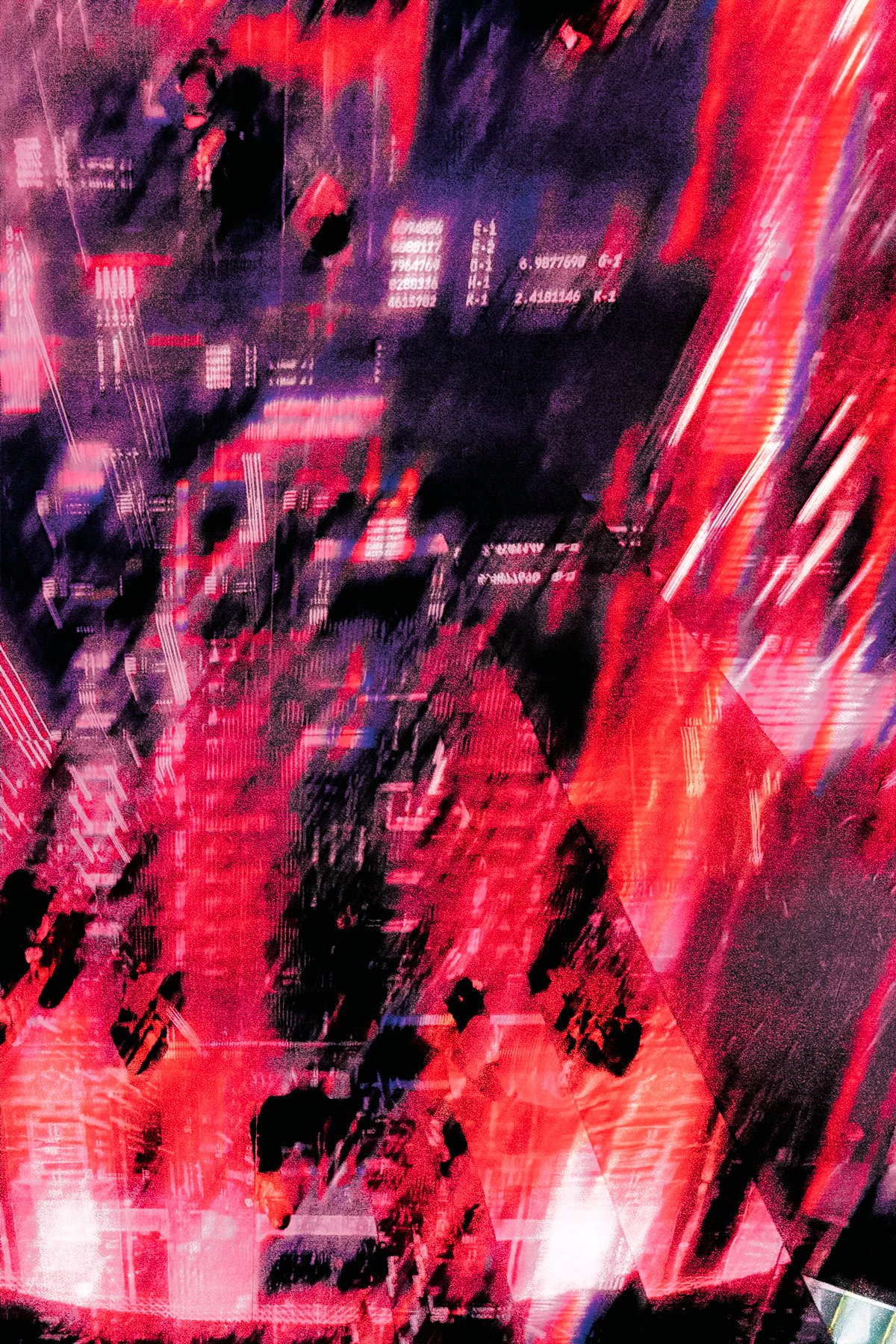
The Red Stain -- 4×6, Mixed Media
